Living Shore
Flora & Fauna
Field Catalogue
From the pine line to the open sea
Walk from the pine forest above Kriopigi to the open Mediterranean and, within a few hundred metres, the landscape changes repeatedly. Forest becomes shrubland, shrubland gives way to rocky and sandy shore, and beneath the surface entirely different biological communities take over. This page follows that journey from land to sea.
The bigger picture
A Mediterranean mosaic
Kriopigi sits at the edge of a small but unusually diverse coastal landscape. In a few hundred metres, the land rises from the shore through Aleppo pine forest, maquis shrubland, and sun-baked phrygana, while the sea offers rocky ledges, sandy pockets, and beds of Posidonia oceanica. This mosaic exists because the area combines a Mediterranean climate, limestone geology, varied topography, freshwater runoff, and thousands of years of human land use. The result is an unusually high number of habitats packed into a very small area, and with them, a wide range of species.
The forest above the shore
Forest canopy
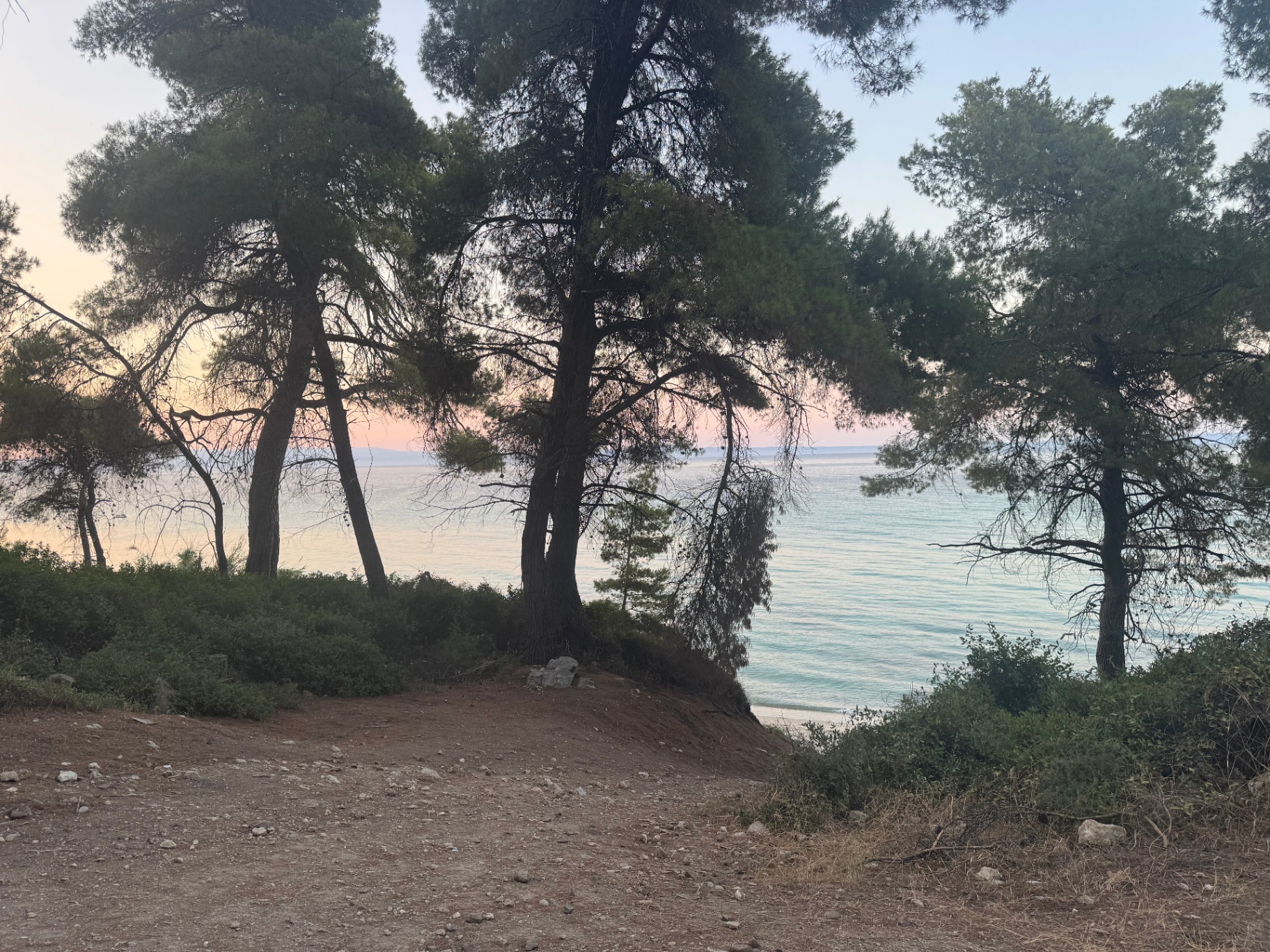
The slopes above Kriopigi are dominated by Aleppo pine (Pinus halepensis), one of the defining trees of the eastern Mediterranean. In places it mixes with Turkish pine (Pinus brutia), forming an open, fire-adapted forest well suited to dry limestone soils.
Maquis underneath
Dense understory
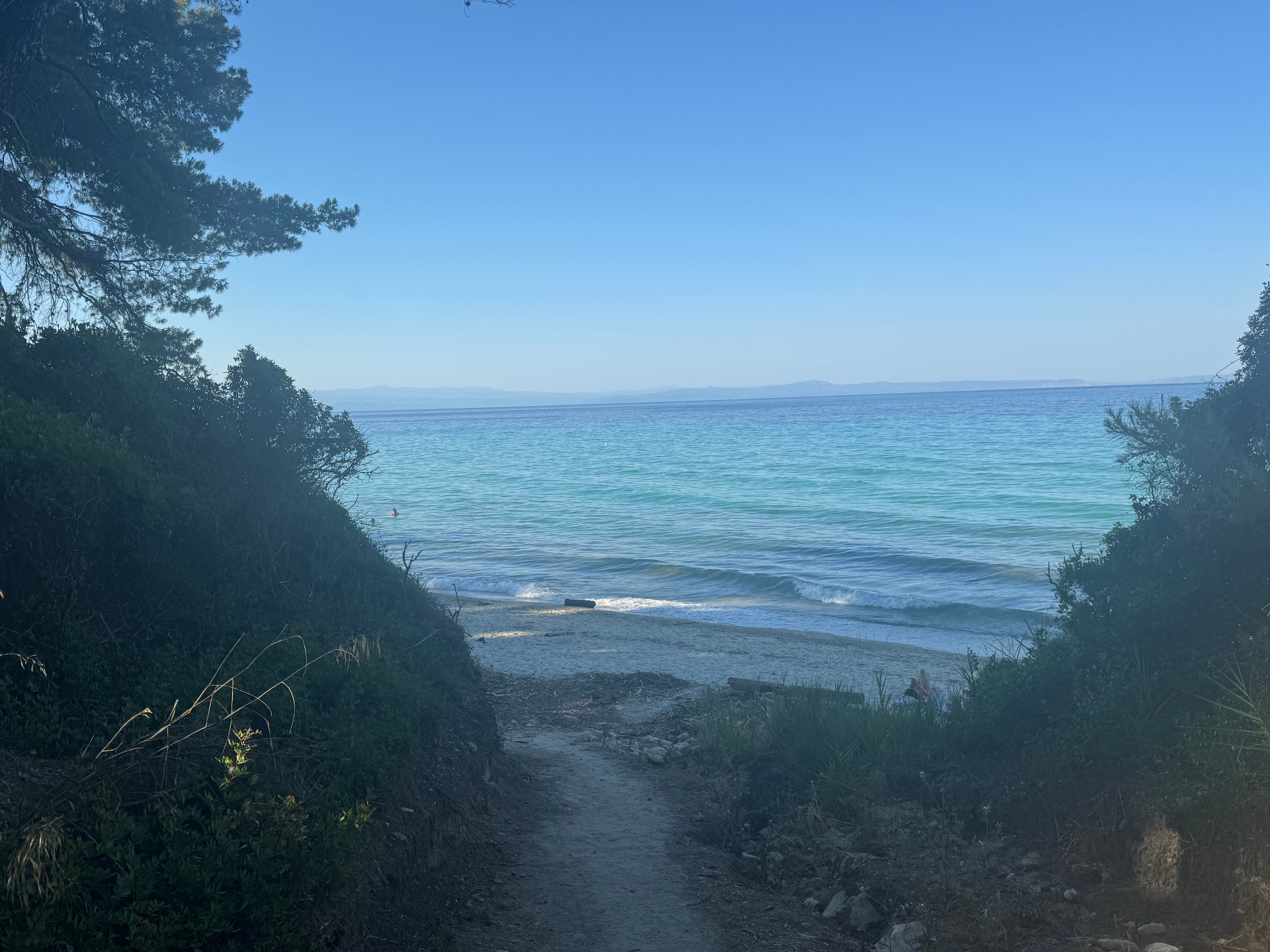
Beneath the pines grows dense evergreen maquis, a tangle of kermes oak, lentisk, strawberry tree, wild olive, myrtle, rosemary, sage and thyme. These aromatic shrubs form one of the characteristic ecosystems of the Mediterranean Basin and provide shelter and food for countless insects, reptiles and birds.
Phrygana on the dry edges
Degraded / exposed dry edge ecology
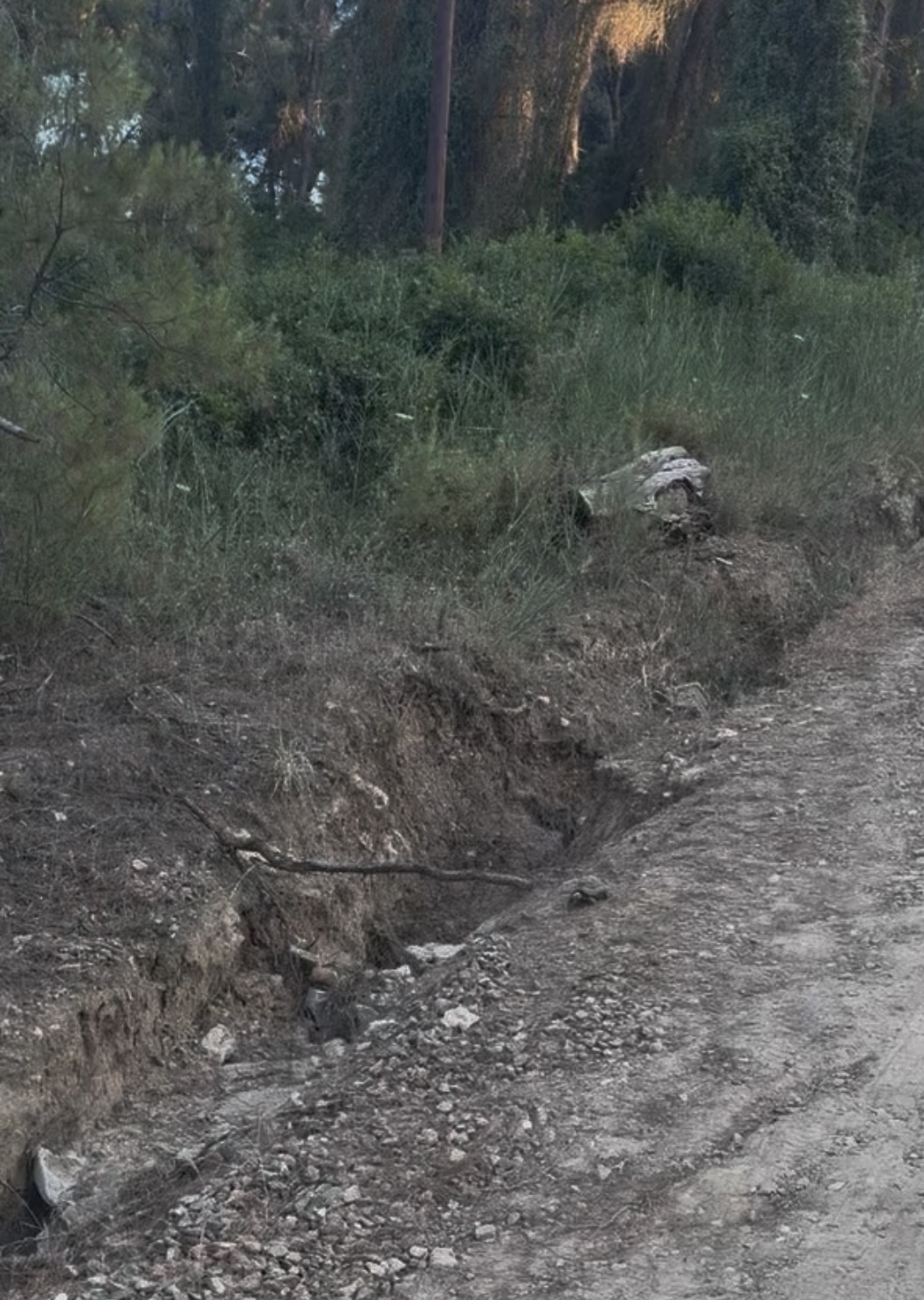
Where soils are shallower, conditions drier and more exposed, or where repeated fire and grazing maintain a lower shrub community, maquis gives way to phrygana. Phrygana is a natural and widespread Mediterranean ecosystem of low, aromatic, often thorny shrubs; human activity often expands or maintains it, but it is not simply degraded maquis. On the dry slopes above Kriopigi, it forms an important transition zone between forest and open coast.
The coast itself
Rocky ledges, tide pools and small pocket beaches create dozens of microhabitats. Crevices provide shelter from waves and predators, while algae, encrusting organisms and accumulated wrack support diverse communities of molluscs, crustaceans, fishes and other marine life.
Posidonia meadow offshore
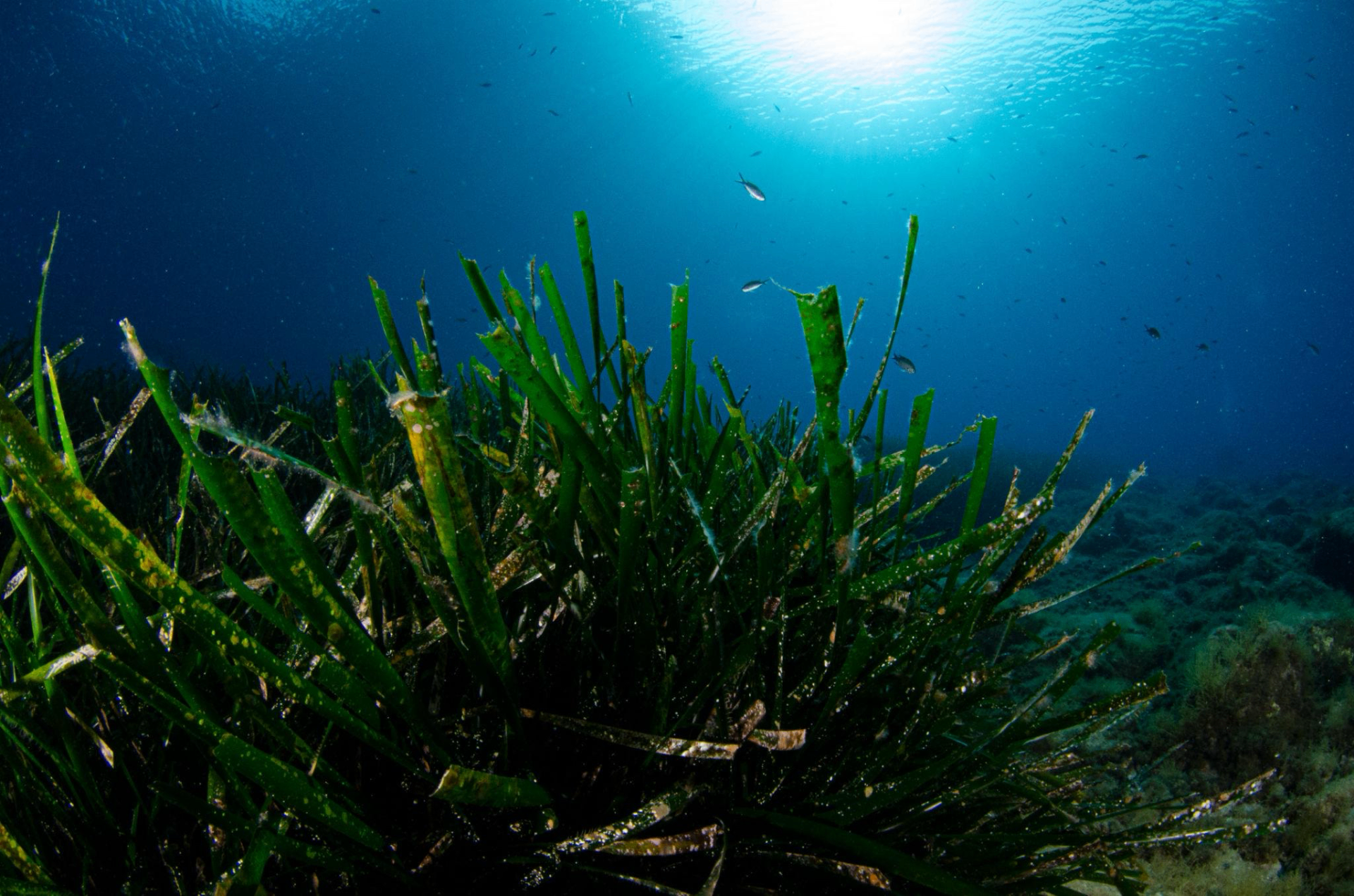
Underwater, the keystone habitat is the Posidonia oceanica meadow. This is not seaweed, it is a true marine flowering plant endemic to the Mediterranean. Its meadows stabilise sediments, improve water clarity, store large amounts of carbon, and provide habitat and refuge for countless marine organisms. They are among the Mediterranean's most important coastal habitats, supporting many juvenile fishes and invertebrates.
Why is biodiversity so high here?
Kriopigi combines many habitats in a very small area. Pine forest, maquis, phrygana, rocky shore, sandy patches, Posidonia meadows, freshwater seepage, and the boundaries between them all create a range of ecological niches. Each habitat supports a different set of species, and their closeness allows many plants and animals to coexist in a narrow strip of coast. This habitat diversity, more than any single factor, explains why the shoreline is so rich in life.
A cultural landscape
Not pristine wilderness
Kriopigi is not untouched wilderness. It is a Mediterranean cultural landscape shaped by millennia of forestry, grazing, agriculture, fire, settlement and tourism. These influences have altered the ecosystems here without erasing their ecological value. Understanding the shore means recognising that human history and natural history are intertwined, and that the landscape we see today is the result of both.
Life Around Kriopigi
A field catalogue begins
These habitats support a remarkable variety of organisms, from orchids and Mediterranean shrubs to migratory birds, reptiles, reef fishes and dolphins. The catalogue below highlights species photographed in and around Kriopigi. Most observations are linked directly to iNaturalist records, and each species page will eventually include links to additional identification resources and references.
Zone 1
Dune & Pine Edge
The terrestrial fringe, sand-binding plants and the Aleppo pine canopy that shades the shore.
 Pinus halepensisAleppo pine
Dominant canopy tree; its resin perfumes the shoreline on hot summer afternoons.
Expected in this habitat
 Eryngium maritimumSea holly
Spiny blue-grey leaves anchor the upper dunes and bloom with metallic-blue flowers in summer.
Expected in this habitat
 Cakile maritimaSea rocket
Fast-growing pioneer of the strand line; pale lilac flowers appear above the sand in spring and summer.
Expected in this habitat
 Larus michahellisYellow-legged gull
Large coastal gull that patrols beaches and cliffs, calling loudly throughout the day.
Expected in this habitat
 Testudo hermanni boettgeriBoettger's tortoise
Slow-moving tortoise of dry scrub and open woodland, often active during the cooler parts of the day.
Observed at Kriopigi
 Mediodactylus kotschyiKotschy's gecko
Small, well-camouflaged gecko that shelters in rocks, crevices and stonework during the day.
Observed at Kriopigi
 Hemidactylus turcicusMediterranean house gecko
Nocturnal gecko often seen hunting insects on walls and around lights after sunset.
Observed at Kriopigi
 Phylloscopus trochilusWillow warbler
Small migratory warbler that moves restlessly through foliage while searching for insects.
Observed at Kriopigi
 Curruca currucaLesser whitethroat
Secretive migratory warbler of shrubs and woodland edges, usually noticed first by its call.
Observed at Kriopigi
 Corvus cornixHooded crow
Highly adaptable grey-and-black crow seen foraging from pine forest to shoreline.
Observed at Kriopigi
 Streptopelia decaoctoEurasian collared dove
Familiar pale dove of villages and woodland edges, recognized by its narrow black neck collar.
Observed at Kriopigi
 Apis melliferaWestern honey bee
Common flower visitor carrying pollen between wildflowers throughout the warmer months.
Observed at Kriopigi
 Episyrphus balteatusMarmalade hover fly
Small orange-banded hover fly that hovers over flowers while feeding on nectar and pollen.
Observed at Kriopigi
 Malva sylvestrisCommon mallow
Purple-flowered Mediterranean herb of sunny disturbed ground, pathsides and open scrub.
Observed at Kriopigi
 Convolvulus arvensisField bindweed
Low twining plant with pale funnel-shaped flowers, common in open and disturbed ground.
Observed at Kriopigi
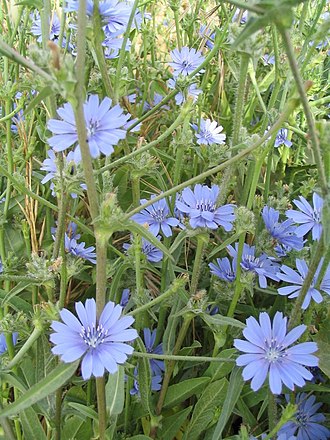 Cichorium pumilumWild endive
Low Mediterranean chicory with blue flowers that open across sunny dry ground.
Observed at Kriopigi
 Decticus albifronsWhite-faced bush-cricket
Large Mediterranean bush-cricket of dry grass and scrub, often heard before it is seen.
Observed at Kriopigi
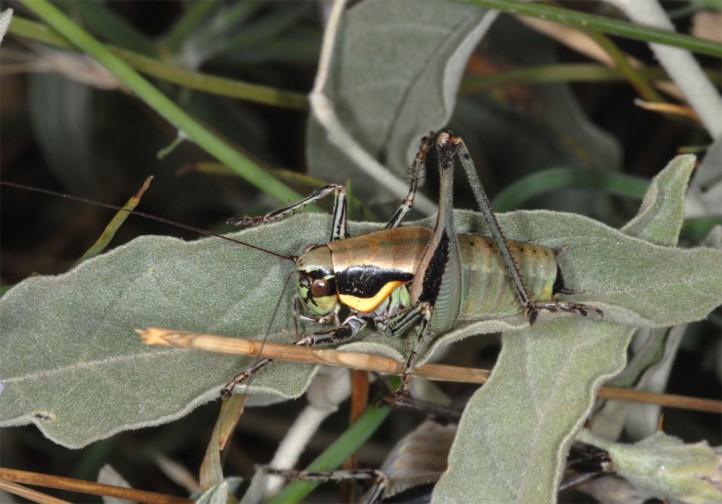 Eupholidoptera smyrnensisSmyrnean bush-cricket
Robust bush-cricket of warm Mediterranean scrub, active among low vegetation in summer.
Observed at Kriopigi
Zone 2
Beach & Wash Zone
The wet sand and breaking surf, turnover habitat for crabs, isopods, and shorebirds.
 Ocypode cursorTufted ghost crab
Fast, pale crab that vanishes into deep burrows above the surf line.
Expected in this habitat
 Tylos europaeusBeach isopod
Nocturnal scavenger that recycles stranded seaweed along the upper beach.
Expected in this habitat
 Charadrius alexandrinusKentish plover
Tiny shorebird that nests directly on open sand or fine shingle; give nesting areas plenty of space in spring.
Expected in this habitat
 Donax trunculusWedge clam
Lives buried beneath wet sand, filtering seawater as waves wash overhead.
Expected in this habitat
Zone 3
Shallow Water
Sun-warmed sand, scattered rocks and the inner edge of the seagrass meadow support many of the fish most easily seen by snorkelers.
 Atherina hepsetusMediterranean sand smelt
Silvery schools shimmer just below the surface over calm, shallow water.
Expected in this habitat
 Diplodus vulgarisCommon two-banded seabream
Recognizable by two bold black bands; juveniles gather around rocks and seagrass.
Observed at Kriopigi
 Sarpa salpaSalema
Herbivorous schools graze algae and seagrass leaves along the meadow's edge.
Observed at Kriopigi
 Dicentrarchus labraxEuropean seabass
Streamlined predator that cruises shallow coastal water, often near rocks and sandy edges.
Observed at Kriopigi
 Sparus aurataGilthead seabream
Recognizable by the golden band between its eyes; feeds over sand, rock and seagrass.
Observed at Kriopigi
 Diplodus sargusWhite seabream
Robust silver seabream with dark vertical markings, commonly feeding around rocky shallows.
Observed at Kriopigi
 Oblada melanuraSaddled seabream
Silver schooling fish easily recognized by the black saddle-shaped patch near its tail.
Observed at Kriopigi
 Lithognathus mormyrusStriped seabream
Slender seabream with narrow vertical stripes, usually feeding over sandy and mixed bottoms.
Observed at Kriopigi
 Chromis chromisMediterranean damselfish
Small dark fish often hovering in loose groups above rocks and reef habitat.
Observed at Kriopigi
 Serranus scribaPainted comber
Colourful ambush predator that waits close to rocks before darting after small prey.
Observed at Kriopigi
 Hippocampus hippocampusShort-snouted seahorse
Master of camouflage that clings to algae and seagrass with its curled tail.
Expected in suitable habitat
 Holothuria tubulosaCotton-spinner sea cucumber
Slow-moving recycler that feeds on organic material within sandy and mixed seabeds.
Expected in this habitat
Zone 4
Posidonia Meadow
An endemic Mediterranean seagrass meadow forming one of the coast's richest habitats, with shelter, feeding grounds and complex structure for marine life.
 Posidonia oceanicaNeptune grass
A true flowering plant that forms long-lived underwater meadows supporting diverse Mediterranean marine life.
Expected in this habitat
 Pinna nobilisNoble pen shell
The Mediterranean's largest bivalve; now critically endangered and fully protected.
Expected in this habitat
 Octopus vulgarisCommon octopus
Empty shells piled outside a rocky crevice often reveal an occupied den.
Expected in this habitat
 Symphodus tincaPeacock wrasse
Large colourful wrasse; males become especially vivid during the breeding season.
Observed at Kriopigi
 Coris julisMediterranean rainbow wrasse
Fast, colourful wrasse that darts across rocky and vegetated bottoms searching for small prey.
Observed at Kriopigi
 Thalassoma pavoOrnate wrasse
Brilliantly coloured, fast-moving wrasse most often seen over sunlit rocky habitat.
Observed at Kriopigi
 Symphodus roissaliFive-spotted wrasse
Small patterned wrasse that searches algae, rocks and seagrass for tiny invertebrates.
Observed at Kriopigi
 Epinephelus marginatusDusky grouper
Heavy-bodied ambush predator that shelters around rocky ledges, crevices and reef habitat.
Observed at Kriopigi
 Sepia officinalisCommon cuttlefish
Master of camouflage that can change colour rapidly and attaches dark egg clusters to vegetation and other structures.
Expected in this habitat

Plankton & Open Water
A single-celled planktonic dinoflagellate, neither animal nor plant, whose blooms can produce blue bioluminescent flashes when the water is disturbed at night.
Observed at Kriopigi
Zone 5
Deep Water & Offshore
Beyond the meadow's outer edge, coralligenous reefs, pelagic visitors, and migratory megafauna.
 Caretta carettaLoggerhead sea turtle
Wide-ranging marine turtle that may pass through northern Aegean coastal and offshore waters.
Expected offshore
 Tursiops truncatusCommon bottlenose dolphin
Social coastal dolphin that travels in groups through the gulf and occasionally approaches shore.
Observed at Kriopigi
 Phalacrocorax carbo sinensisContinental great cormorant
Large diving waterbird that swims low in the water and pursues fish beneath the surface.
Observed at Kriopigi
 Thunnus thynnusAtlantic bluefin tuna
Powerful migratory predator of open water that may pass offshore during seasonal movements.
Expected offshore
 Paramuricea clavataViolescent sea-whip
Large gorgonian that forms fragile branching colonies on deeper Mediterranean rocky reefs.
Expected in deeper habitat
 Scyliorhinus caniculaSmall-spotted catshark
Small bottom-dwelling shark whose tough egg cases may occasionally wash ashore.
Expected offshore