Reading the maps
The deep story beneath Kassandra
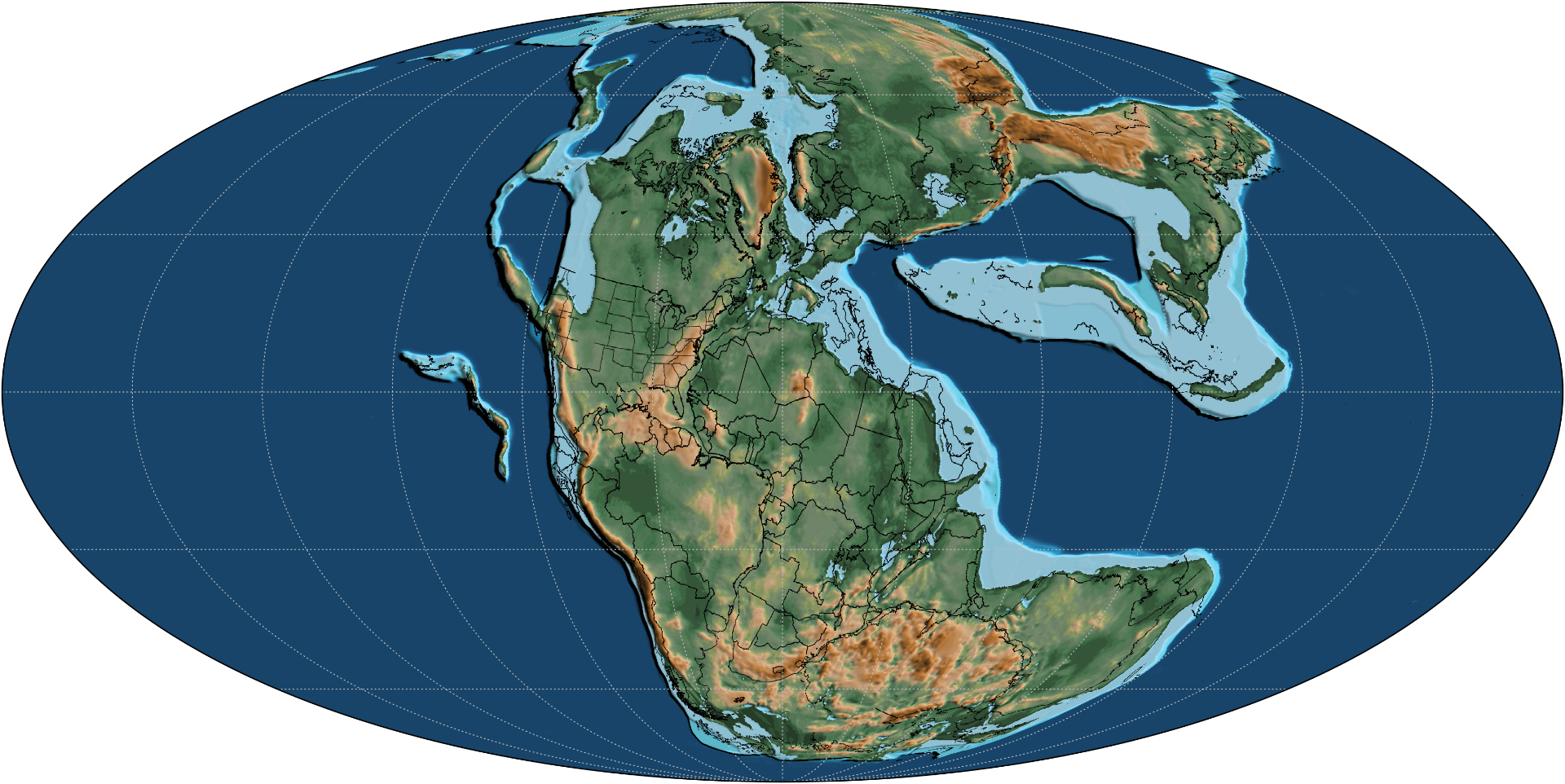
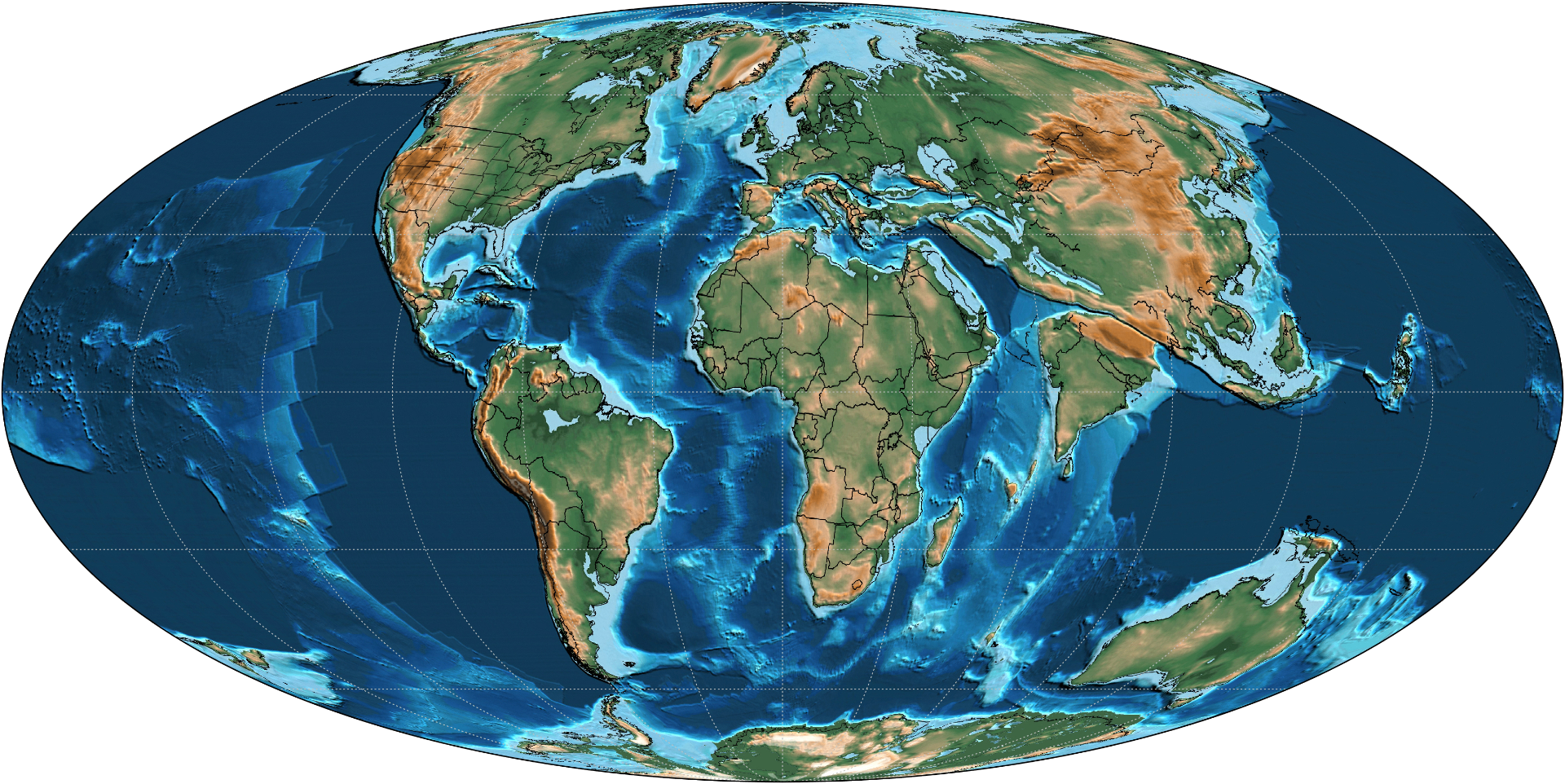
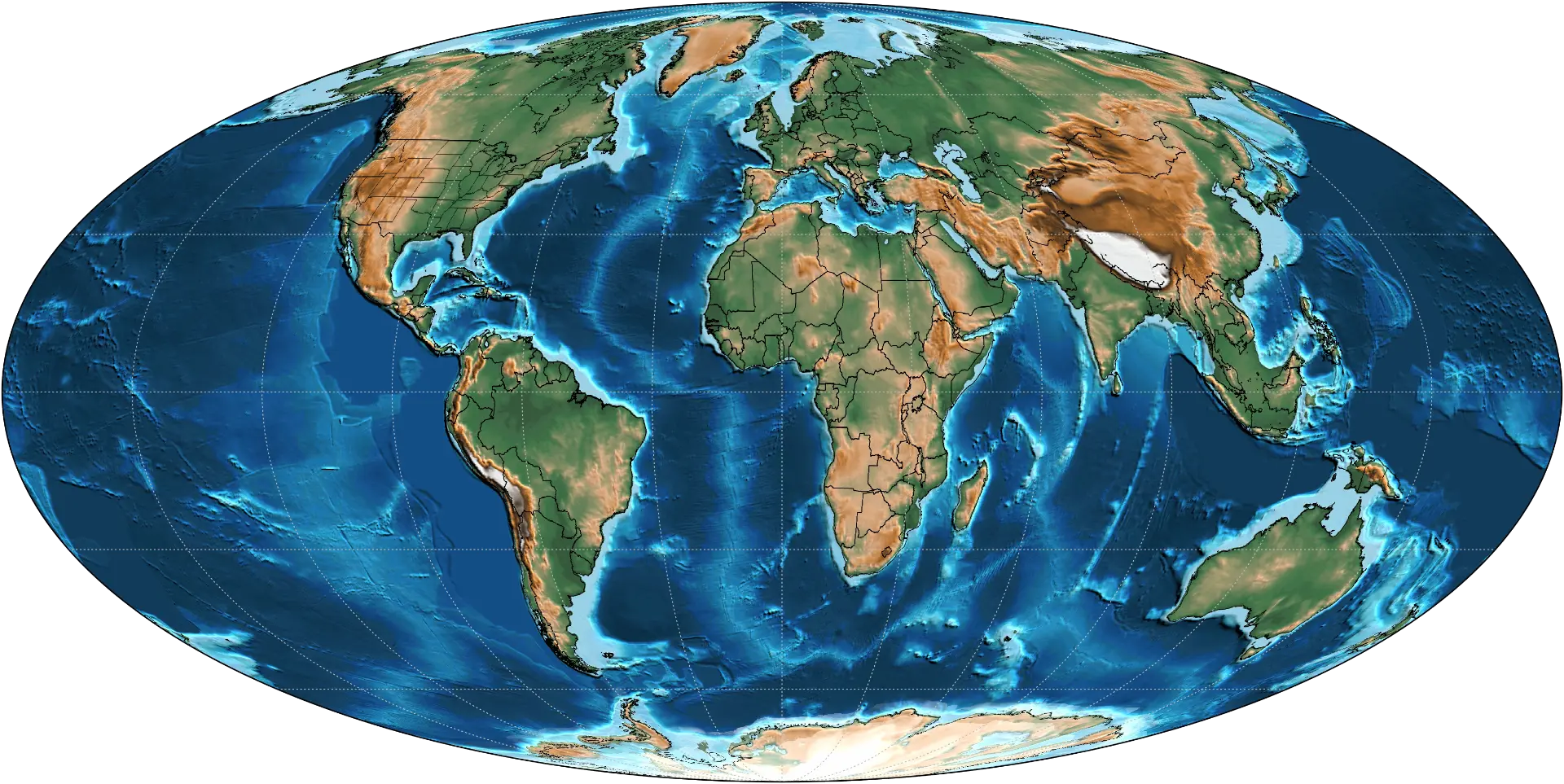
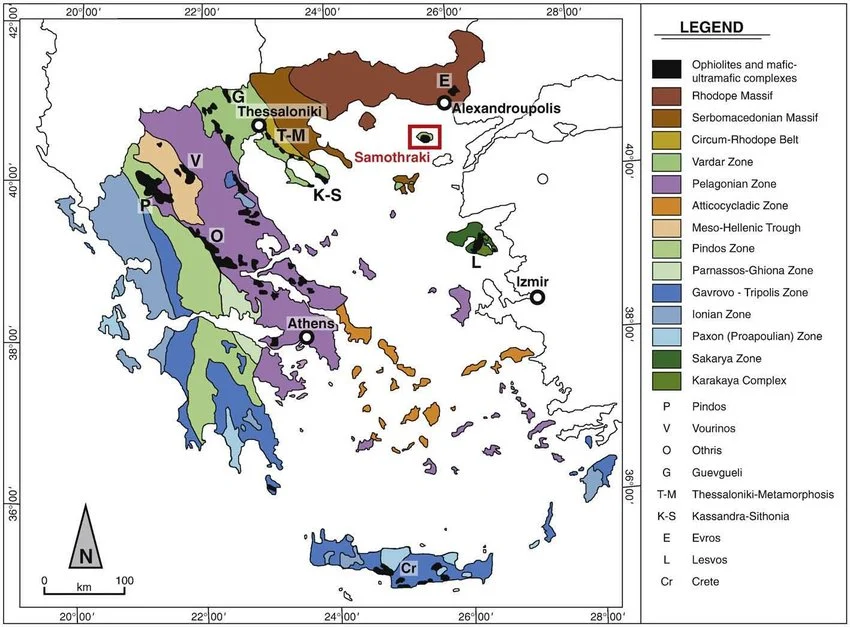
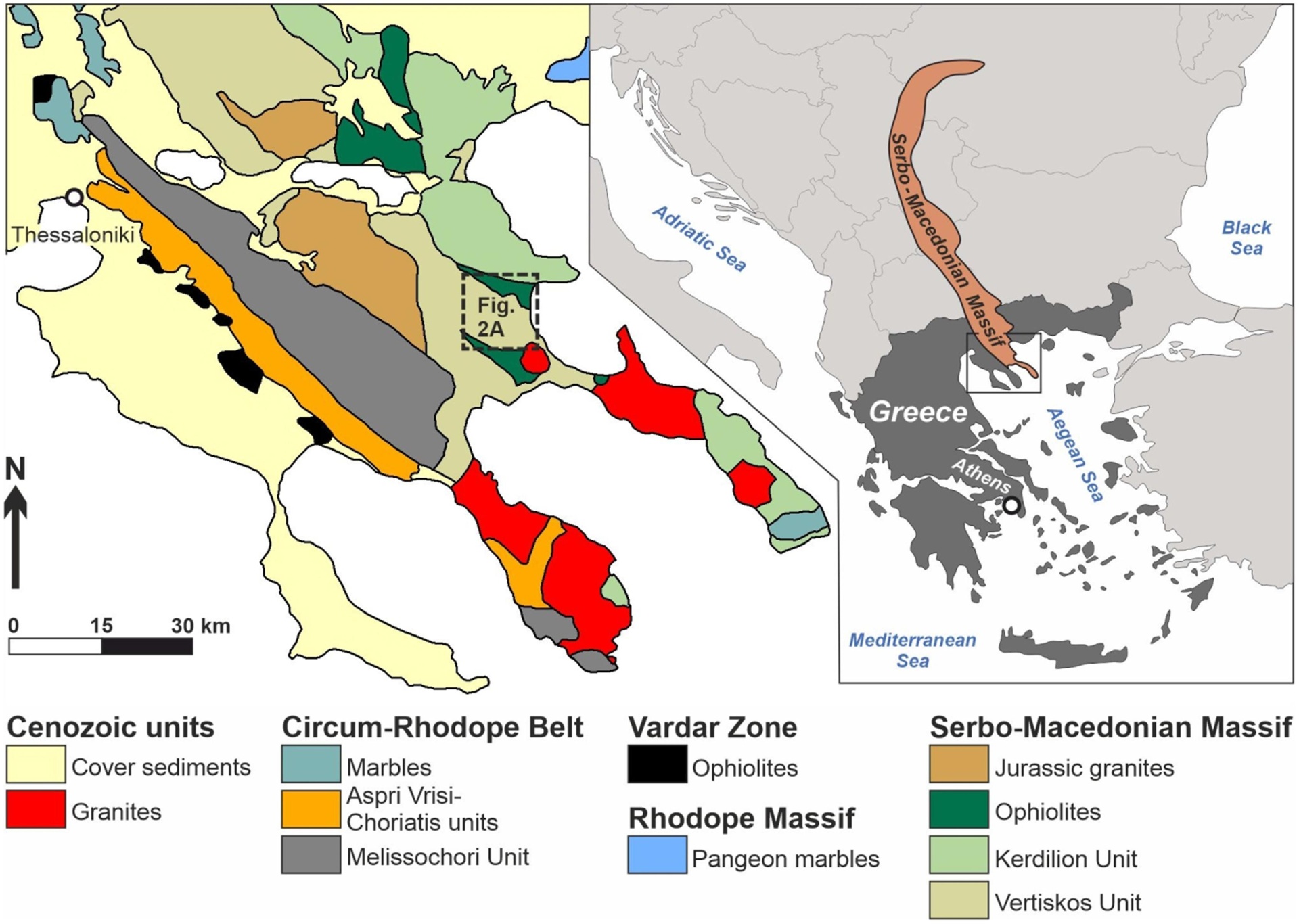
The colored zones above are not decoration, they represent different tectonic terranes: fragments of crust with separate geological origins that were compressed and welded together over hundreds of millions of years during the formation of the Hellenides, Greece's mountain system. The Halkidiki peninsulas occupy the southern margin of this tectonic collage, shaped by continental collision, mountain building, uplift, faulting, the closure of the ancient Tethys Ocean, and millions of years of erosion. The landscape you walk through today is the surface expression of that deep geological history.
How geology shapes the coast today
1. Why the terrain is hilly and dissected
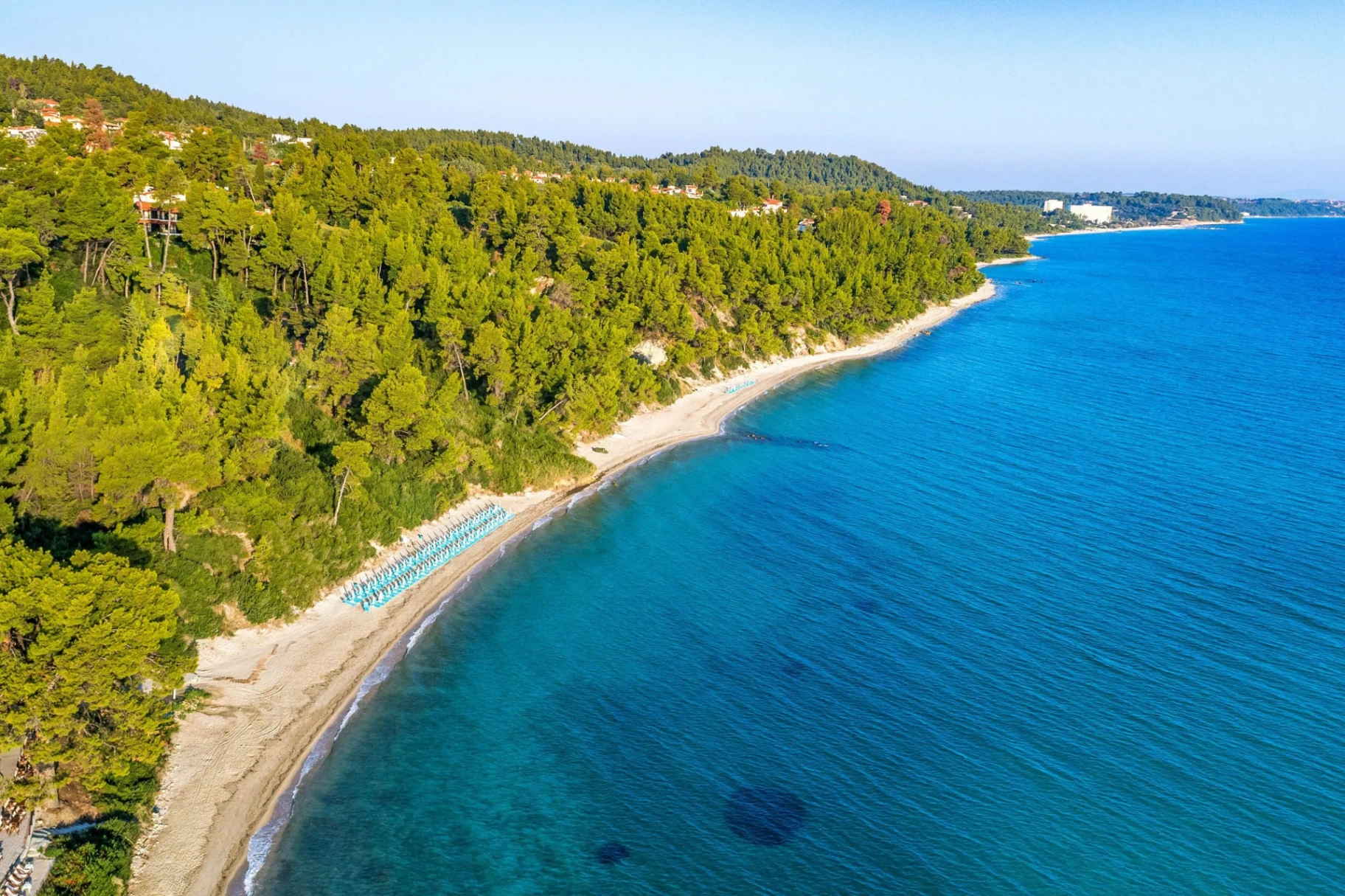
Kassandra is an uplifted, faulted peninsula characterized by steep slopes, gullies, drainage cuts, ridges, coves, and irregular shorelines. Mediterranean rainfall often arrives in intense bursts, and winter erosion, sediment transport, and slope instability continue to shape the landscape today.
2. Why the soils are thin and dry
Around Kriopigi, the landscape is developed largely on Neogene and Quaternary sediments resting above older geological basement. The resulting soils are generally thin, well-drained, and prone to summer drought, favoring Aleppo pine, Mediterranean maquis, phrygana, and aromatic shrubs rather than dense temperate forest. These conditions give the landscape its characteristic open, resinous, silver-green appearance.
3. Why the water is so clear
Low sediment input from the peninsula, together with the naturally oligotrophic waters of the Aegean Sea, results in exceptionally clear water. Without large muddy rivers delivering suspended sediment, light penetrates deeply into the coastal waters, supporting extensive seagrass meadows.
4. Why there are springs and cold-water pockets
Faults, fractures, and permeable sedimentary layers channel groundwater through the peninsula. Rainwater infiltrates the subsurface and re-emerges as coastal springs, seepage zones, and localized cold-water upwellings, creating small-scale differences in temperature, salinity, nutrients, fish distribution, and seagrass productivity. Kriopigi, 'the cold spring', takes its name from one of these freshwater sources.
5. Why the beaches alternate between sand, pebbles, and rock
Different rock types and sedimentary deposits erode at different rates. Within a few hundred metres the coast can shift through rocky shelves, pocket coves, coarse gravel beaches, sandy sections, cliffs, and submerged reefs, each one a readout of the rock beneath, the wave exposure above, and the sediment supply between.
The bigger idea
Ecology begins with geology
The forests, shrubs, springs, beach types, erosion patterns, water clarity, and marine habitats around Kriopigi all arise from the same fundamental processes: geology, tectonics, climate, water movement, and time. Read the coast that way and it stops being scenery, it becomes a system.